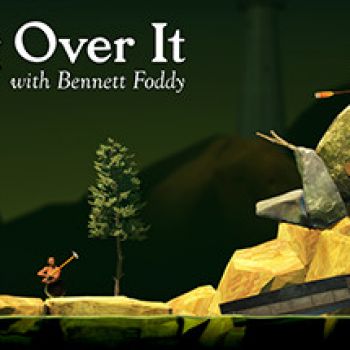
Overview of Getting Over It
Getting Over It is a title that has become a reference point for players who enjoy a pure test of perseverance. The game presents a minimalist visual style that focuses the player’s attention on the core mechanic of climbing a towering structure. There is no narrative overlay, no inventory system, and no traditional level selection. The experience is built around a single continuous ascent that rewards patience and careful movement.
The reputation of Getting Over It stems from its reputation for difficulty. Each upward push feels like a small victory, while a single slip can erase many minutes of progress. This dynamic creates a strong emotional loop that keeps players returning to the game, hoping to improve their personal best or simply to experience the satisfaction of reaching a new height.
Gameplay Experience and Core Challenge
The central challenge in Getting Over It is the balance between precision and momentum. Players must learn how to apply just enough force to overcome obstacles without losing control. The game’s physics engine reacts realistically, meaning that every swing, push, or pull has a direct impact on the character’s position. This realism makes each movement feel weighty and meaningful.
Because the game lacks checkpoints, the sense of risk is amplified. A mis‑calculated motion can send the player back to a lower section, forcing them to repeat previously mastered sections. This design encourages a mindset of deliberate planning. Players often find themselves analyzing the shape of each obstacle before committing to a move.
The visual design is intentionally sparse. The background remains static while the foreground elements shift as the player progresses. This lack of visual clutter helps maintain focus on the immediate task. The sound design is equally minimal, with subtle audio cues that reinforce each successful motion.
Practical Guidance for New Players
For those approaching Getting Over It for the first time, the following suggestions can help smooth the learning curve.
Adopt a Calm Pace
Rushing through the ascent increases the likelihood of a costly slip. It is better to move slowly and assess each segment before acting. A measured approach reduces the chance of over‑extending a movement.
Master Small Adjustments
The game rewards subtle adjustments over large swings. Practice making tiny changes to the angle of movement. These micro‑adjustments allow you to correct your trajectory without losing momentum.
Focus on Consistent Contact
Maintaining a steady point of contact with the climbing surface provides better control. Try to keep the tool you are using in contact with the structure at all times, as losing contact often leads to a sudden drop.
Learn from Each Fall
Every setback offers a lesson about the limits of your current technique. When you fall, take a moment to observe which part of the movement caused the loss of control. Use that observation to refine your next attempt.
Set Personal Milestones
Because the game does not have defined levels, creating your own milestones can keep motivation high. Celebrate reaching a new height marker or surviving a particularly tricky section. These small victories build confidence for the next challenge.
Frequently Asked Questions
Is Getting Over It suitable for casual players?
The game is designed for players who enjoy a high level of difficulty. Casual players may find the steep learning curve frustrating, but the experience can also serve as a rewarding test of patience.
Can I play Getting Over It on multiple platforms?
The title is available on several operating systems, allowing a broad audience to experience the challenge. Check the official distribution channels for the specific platforms supported.
How long does a typical play session last?
Play sessions vary widely. Some players spend a few minutes attempting a single section, while others dedicate several hours to reach a new height. The open ended nature of the game means there is no fixed end point.
Are there any hidden shortcuts or secret paths?
The design of the game focuses on a single continuous climb. There are no hidden shortcuts, and each segment must be traversed using the same core mechanic.
What makes Getting Over It stand out from other platformers?
The combination of minimalist visuals, realistic physics, and an unforgiving progression system creates a unique experience. The emotional intensity of each success and each failure sets the game apart from more forgiving titles.